Pages

Friday, June 23, 2023

Debut Author Ed Mishrell on Writing The 5 Truths for Transformational Leaders

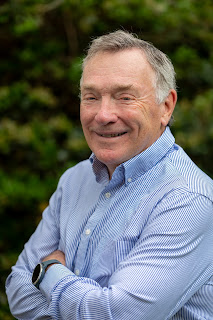
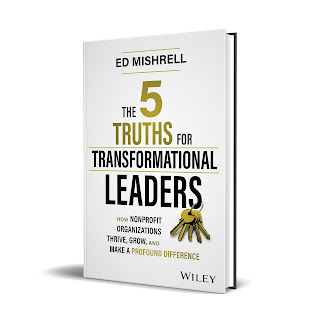
My name is Ed Mishrell, and last month my first book, The 5 Truths for Transformational Leaders: How Nonprofit Organizations Thrive, Grow and Make a Profound Difference was published. It was thrilling to hold the book in my hand after three years of working and thinking about it every day. I worked most of my adult life for nonprofit organizations, first at community-based organizations in Philadelphia and then at the Boys & Girls Clubs of America (BGCA) National Office. When I read Marisa’s email asking for blog posts for The Seymour Agency's blog, I reflected on my journey as a first-time author, what I learned and how I managed to complete a book. I identified five phases, each with its own challenges.
1. Clarify the purpose of the book

2. Get organized to research and write the book

3. Find an agent and publisher

4. Publish the book

5. Market the book.


Clarify the mission and purpose of the book: In the fall of 2019, I made the decision to write a book about leadership in nonprofit organizations. I made a few false starts but didn’t make much progress until I clearly defined my goals for the book. The question I needed to answer was “what difference can this book make.” While there are thousands of books about leadership, very few are based on the experience of successful nonprofit leaders. I believed nonprofit leaders needed a mission driven leadership model that met the unique challenges of leading a nonprofit organization. And I believed my experience uniquely qualified me to write the book. Writing a book takes a long time. A mission and clear sense of purpose kept me focused and motivated to spend time everyday writing.


Get organized to research and write the book: I began working in earnest on the book in January of 2020. The first couple of months were exciting but not very productive. I quickly became totally disorganized.  I wasn’t sure how to organize my time and make progress every day. I needed a process and strategy for how to proceed. I learned a couple of valuable lessons:


·   I quickly created hundreds of pages of notes from interviews plus hundreds more from books and articles I read. I couldn’t easily find anything. I needed to establish a system for organizing my research.  


·   I needed to work on the book every day even when it was a struggle to write anything meaningful.  When I worked on the book every day, it was always front of mind. Breakthroughs came at unexpected times. When I took a day or more off, it was very difficult to get restarted.


·   The book didn’t need to be written in order. If I had an idea for something I felt was important for chapter 5, I would spend the day working on that part of chapter 5. 


·   I needed to keep going back to rewrite and revise to make sure everything was in sync. My thinking often evolved from something I wrote early on. I needed to keep going back to make sure everything was aligned.


Find an agent and publisher: My sense of purpose and strong belief in the difference the book could make for nonprofit leaders kept me focused in spite of the rejections I received to my carefully crafted query letters. I am so grateful to be working with Marisa. From the first time I read her bio and talked to her I knew she was the perfect agent to represent me. Thank you, Marisa and The Seymour Agency. You are the best. And thank you, Wiley, for believing my book was worth publishing.


Publish the book: This went by very fast and while the editing process and then preparing the book layout was intense, it was exciting; after two plus years publication was a reality.

Market and promote the book: This is where I am right now. I am not always comfortable promoting myself and I need to keep pushing myself. Before publishing a book, I never had a web site, a YouTube channel, or a blog. I seldom posted on social media. I wasn’t on any podcasts.  I wasn’t speaking at conferences.  This is all new and I am still learning.  When I am having trouble, I reflect back on my mission to create a book that would help nonprofit leaders make a bigger difference. This pushes me to keep moving out of my comfort zone. The last of the five truths is to continue to grow as a Leader. What I learned from interviewing successful leaders is that the leadership they provided to grow the organization was often no longer effective when the organization became larger. Success means leaders need to adapt and change. Every leader I interviewed said evolving into the leader the organization needed after unprecedented growth was the hardest thing they ever did. And some of them were not successful.


This is the same lesson for me as a first-time author. I am switching gears and contacting people I know and don’t know to invite myself into their organization to talk about my book. What fun I am having.


Ed Mishrell


* * * CONNECT WITH ED * * *


The 5 Truths for Transformational Leaders – Learn how nonprofit organizations thrive, grow, and make a profound difference


LinkedIn          


Facebook


Friday, June 16, 2023

Interview + Giveaway with Marie Tang

 What is your writing schedule like?

I hate to admit it, but it’s chaotic! With my first book out in the world, I now have 1001 ideas swimming around my head on how to promote it, all while thinking of what my next book might be. So when I’m not working my part-time gig at the senior center, helping my husband market his business, or trying to feed my teenager and her friends who always seem hungry, I am writing. If it’s not a new manuscript idea, it’s a blog post, a letter to a school, or an email request to friends to suggest my book at the library. Sometimes I’m updating my bio or writing content for the website updates I need to make. All and all, I am writing. It’s just not part of a schedule that I would eventually like to have. The one thing that I have been doing regularly is meeting (virtually) with a lady out in Cincinnati whom I met by chance during an online writing course. We spend an hour and a half 3 days a week working on our Middle Grade novels. I’m always telling her how grateful I am that she reached out to this introvert and got me on this schedule. Without it, I wouldn’t have the first draft of an MG novel to talk about!


What has been the most thrilling part of being published?


You know that book “The Secret” that talks about willing something to be? I feel like I willed being published to be. I don’t think I ever said it out loud the way I do now with my affirmations, but for years I would repeat in my head, “I will be a published author, I will be a published author…” It was thrilling to see that come to fruition (not without a lot of work and perseverance along the way of course).


The other thrilling thing is hearing and watching children react to my book. As a former teacher, I’ve always been tickled when a child reacts to a funny or sad, or scary emotion in a book. It’s a magical thing to witness and I feel honored when I hear a child has made a connection to my story.


What do you think makes a good book?


For me, a good book is all about the characters and how they move throughout the story. I love trying to guess how a character is going to react in a scene and what they’ll do next. This to me makes the book worth reading. I am also a big comedy fan so if a story has humor and heart, it grabs my attention.


How long does it take you to write a book?


I’ve been mainly focused on picture books. I would say it takes me an average of twelve revisions before I feel good about submitting to it my agent (although I’ve come out of my shell a little lately and tested sending something on revision 2 or 3, hehe) I tend to have lots of initial theme ideas too but those pretty much stay in my head until a second spark causes me to realize the potential for a story and there is no telling when that happens.


What's one thing you can't live without?


I’m going to give a corny answer here, but I couldn’t live without books. I didn’t truly discover reading until I was pretty much an adult. English was my second language and throughout grade school, I was turned off by the way recommended reading was presented to us. I also didn’t have the support I needed to love reading. That changed in my sophomore year of college. I fell head over heels for Harry Potter and my joy of reading began! I don’t stop reading now. It helps me in so many ways. I read everything from business books, to self-help, to children’s books, and all varieties of fiction. I usually have 3 to 4 books lying around that I’m reading at the same time at different times of the day.


Fun Facts:


Coffee or tea? BOTH! Coffee in the morning, tea at night.

Morning or night? Morning

Rivers or oceans? Rivers

White wine or red? Red

Champagne or liquor? Liquor

Cupcakes or ice cream? Ice cream

Laptop or desktop? Laptop

Casual or couture? Couture

Ponytail or headband? Ponytail

Shower or bath? Bath

Summer or winter? Summer

Motorcycle or bicycle? Motorcycle


About Marie


Marie Tang was born in Hong Kong, raised in New York City, and lived in Shanghai for more than a decade. The unique characters and neon lights of “The Big City” have been an ever-present source of inspiration for her. She proudly tells the tales of the grit, tenacity, and compassion of the Asian people. She is the author of YUNA’S CARDBOARD CASTLES, with three more books releasing the coming years.


* * * GIVEAWAY! * * *


Click HERE to enter the Rafflecopter giveaway for a chance to win:


- a signed copy of Yuna's Cardboard Castles

- a pair of origami earrings


* * * Connect with Marie * * *


Website: https://www.marie-tang.com/

Instagram: https://www.instagram.com/marietangauthor/


Friday, June 9, 2023

A B’nai Mitzvah Story by Stacey Agdern

When I was 12, I had my bat mitzvah. I studied long and hard, and on a Saturday morning in October, I stood in front of my family and congregation, read from the Torah, gave my speech and celebrated.

Not long after that, I went to a synagogue a few towns north of where I lived, to celebrate another Bat Mitzvah.  But there was something different. The celebrant was the mother of one of my brother’s friends, a woman in her forties.  Because for multiple reasons, she hadn’t had the chance to have her Bat Mitzvah at 12 or 13 like I did.


When I was younger, I didn’t understand what must have gone through this woman’s head, what made her decide to not only take this step, but also create the space in her life in order to prepare for it. Because as a 12 year old, the space in my life to study for my bat mitzvah was made for me. My parents facilitated this practice, and also made sure I stuck to the schedule created for that purpose. They drove me to lessons and told me when and where I needed to study. Even over the summer.


But my brother’s friend’s mom didn’t have that luxury. Her time, as a professional, a mother and a wife, was rarely her own. Which meant that if she was going to stand before her congregation and have her own Bat Mitzvah, she needed to carve space for that too.


Years later, I involved myself in conversations about what ‘adult coming of age’ books would look like. And that was when I remembered hearing stories about athletes and comedians having their own Bar and Bat Mitzvahs as adults. These people had taken the time, as a way of rediscovering or reconnecting to their Jewish heritage, to undertake the study necessary to prepare for the ceremony. 


As I thought about their stories, and what they had to do, I was reminded of my brother’s friend’s mom.


All of these stories, in so many ways, became the inspiration for what would become the B’Nai Mitzvah Mistake. You can see two different journeys towards the choice to have this ceremony as an adult in Judith’s and Asher’s story. And I hope that you also see love.


* * *

FAST FACTS

Coffee or tea?

I can’t choose; I love both

Morning or night?
That weird space where night becomes morning :D yes I’m that kind of night owl


Rivers or oceans?

I live by the river but love visiting the ocean


White wine or red?

White when it’s sweet, red when it’s dry


Champagne or liquor?

Depends


Cupcakes or ice cream?
cupcakes :D


Laptop or desktop?

Laptop to write, desktop to edit


Casual or couture?

Casual :D


Ponytail or headband?

Ponytail


Shower or bath?

Shower


Summer or winter?

Both


Motorcycle or bicycle? Uhhhh.


* * *


GIVEAWAY


Stacey is giving away one copy of her new release to a random commenter!


Not sure what to say? Ask her a question or let her know if you've read another one of her books!


Winner will be chosen at random on Friday, June 16, 2023. If you do not include your email in your comment (not required to win), please be sure to check back here on Friday, June 16, 2023 to see if someone from the agency has replied to your comment letting you know you've won a copy of Stacey's book! See footer for giveaway terms and conditions.


* * *


About Stacey


Stacey Agdern is an award-winning former bookseller who has reviewed romance novels in multiple formats and given talks about various aspects of the romance genre. She is also a romance writer. C. She lives in New York, not far from her favorite hockey team's practice facility.


***


Connect with Stacey!


TikTok: https://www.tiktok.com/@sagdern

Instagram: https://www.instagram.com/sagdern/

Facebook: https://www.facebook.com/staceyaagdern

Website: https://www.staceyagdern.com/

Thursday, September 23, 2021

Meet Author-Illustrator Andrea Tripke

We're so excited to share with you this interview with author-illustrator Andrea Tripke!

1. Tell us a little bit about yourself and your writing career.

I love my job. I am not a person who can just sit around for very long time doing nothing. I started writing only a few years ago. 2. When did you realize you wanted to be a writer? After being commissioned to illustrate my first picture book, I was hooked. Naturally I was wondering if I could come up with my own stories… 3. Why are you a writer? Illustrating my own ideas and stories is the best thing ever! I have so many ideas. Instead of just painting a single image, I come up with a story for a whole book. 4. What is your writing schedule like? I don’t have a writing schedule. Our critique group asks for submissions during the first week of each month, and I usually start brainstorming and writing a few days before due date. If something comes up, I write it down and submit. Working under pressure does make things happen.


5. What advice would you give yourself if you could go back in time before you were published?
Don’t look for ideas a child might like to read, but ideas a mom would like to read to her child. I find this a lot easier, and chances are I am coming up with something unique. Every idea can be turned into a children friendly story. Join a critique group! 
6. What has been the most thrilling part of being published? 
Seeing my books in stores is unbelievable. Knowing that children everywhere can read them is more rewarding than anything else.
7. What do you think makes a good book?
I think it needs to be interesting and unique, including the images. Besides, it doesn’t hurt to make it appealing to the adult reading it to a child.

8. How did you come up with the idea for your book Miranda, Queen of Broken Toys? 
Most of my stories are written spontaneously. Sometimes I pull my car over to write down an idea before it is gone. The idea for Miranda, Queen of Broken Toys formed, when I was trying to decide what to do with my daughter’s old and damaged toys. Nowadays, a lot of toys end up in the garbage because it’s so easy and inexpensive to replace them. I was wondering if it should be like this.
9. What was the hardest part of writing your book? 
Writing the first sentence. 
10. How long does it take you to write a book? 
The fastest picture book manuscript took me less than an hour to write. I couldn’t sleep and suddenly came up with an idea. I got up around 1am in the morning and was back to bed before 2am. Of course, it needed tweaking afterwards. That’s when my critique group comes in.
11. How many books have you written, and which one is your favorite?
I have only been published (as a writer) with one book, but after joining my critique group in 2019, I have written about one manuscript a month. The group keeps me going. The most recent story is usually my favorite.


12. Do you buy books based on the cover or the blurb? 
As an illustrator I tend to buy books by the cover art. 
13. What books have influenced your writing? 
I like picture books that entertain me as a parent too. Books by Ryan T. Higgins or Philip C. Stead are highly entertaining, just to name a few. 
14. Do you prefer ebooks, paperbacks, or hardcover? 
I prefer hardcover picture books. They are durable and look good in a bookshelf.

15. What were the last three books you read?
Currently, I am reading Harry Potter with my daughter. The last picture books I purchased (and read) were The Secret Garden and Creepy Carrots. The pandemic slowed me down, and I haven’t been as often to the bookstore as before COVID.

16. What do you do when you're not writing? 
Working on book dummies. Each story that has been approved by my lovely agents Marisa Cleveland and Joyce Sweeney will be turned into a book dummy. Besides that, I am a full-time mom.
17. What is your typical day like?
I try to fill every free minute, means the time I don’t spend taking care of my daughter, dog, hamster, fish, parrot and sometimes husband, somehow creatively.
18. What's one thing you can't live without?
I can’t limit it to one thing. I can’t even limit it to 10 things!

About Andrea

Andrea Tripke is a German-born artist who has illustrated books for children, including A Girl named October by Zakieh A. Mohammed and Selfie the Elfie by Savage Steve Holland. She studied at the Columbus College of Art and Design before pursuing her lifelong dream of becoming a children’s book writer and illustrator. Miranda, Queen of Broken Toys is her first authored/ illustrated book.

Connect with Andrea through her website or on Twitter.
Buy MIRANDA, QUEEN OF BROKEN TOYS

Amazon    |     Barnes and Noble


Thursday, June 17, 2021

A Twitter #PBPitch Success Story with Ronna Mandel!

 By Maggie Apostolis

Was writing a lifelong dream or something you sort of fell upon?

I recall first being enamored when taking high school and college short story and playwriting classes. I also began composing essays. After I studied abroad in Paris and London, all I wanted to do was travel writing. In fact, I actually toured the country in one of my jobs giving educational seminars on travel to Russia, Eastern Europe, India and Europe. Writing speeches was such fun! When my husband, daughter and I moved to Frankfurt and then London, I took classes, joined critique groups and began writing short stories and entering contests. I also began writing an adult murder mystery. That all changed to writing for children after I had my own children and LA Parent magazine, where  I worked when I moved back from living overseas, asked me to begin a blog and review children’s books.


Did school/education have a positive or negative impact on your writing?

I originally thought I wanted to major in art and become a set designer for theater, but once at university I changed my mind. My university had a strong English department and the classes I took prompted me to create an interdisciplinary major called Media Production and Writing. I thought I would write for television but never did. Fortunately, as a result of several creative jobs post college, (publicity in publishing, advertising and then travel) I’ve ultimately found my passion in writing for children. So in this roundabout answer, I’d say yes, my education had a positive impact since I’ve been in writing jobs ever since graduating.


Who is your favorite author?

To be honest, I can’t name just one favorite. Each time I read and love a book, that’s my current fave. There are many kidlit authors whose writing I admire including Sandra Boynton, Tammi Sauer, Marla Frazee, Jane Yolen, Kelly Starling Lyons, Ryan T. Higgins, Josh Funk, Jon Klassen, Andrea J. Loney, Carole B. Weatherford, Tara Lazar, Jerry Craft, Alexis O’Neill and tons more!!


Who or what is your biggest influence when it comes to the work you produce?

My own life experiences and those of my family constantly influence my writing. Whether I’m writing about special needs, bullying, fitting in, or Jewish culture, there is usually something I can tie to my childhood, my parenting experiences, travel and life overseas, as well as the ever-changing world around me.


What do you want to see change about the literary world?

I’d like to see more works from BIPOC authors and illustrators. It’s starting though. I see that as a reviewer which is terrific. That being said, I’d also like to see books by Jewish authors sharing non-stereo-typical experiences across the board and the same for disabled, LGBTQIA and neurodiverse authors and illustrators.


If your reader could know one fun fact about you or one of your character’s, what would you want to share?

I’m ambidextrous and I play a mean air guitar.


How have you witnessed your work change over the years as a writer?

My writing improves with every course I take and every book I read.


How do you cope with writer’s block?

I think I really don’t cope with it. I ignore it. That’s why deadlines are so good. When I don’t feel the creativity flowing, I often do non-writing things like arts and crafts (I love decoupage and papier mache), listen to my favorite radio podcasts or go for a walk.


Where is your favorite place to write?

One of my favorite places to write is the main branch of the Pasadena library. Being surrounded by warm wooden décor, studious people, and thousands of books is so calming and inspiring. I also like to write with a group of kidlit who used to meet at a café weekly prior to the pandemic. I cannot wait to return there.


Wrap up question that I like to ask all writers; what is the one piece of advice you want to offer to aspiring authors and writers?

I’m laughing because I still consider myself an aspiring author since I’m not published yet. My advice is to feed your creativity by feeding your soul. Do the things that spark joy and likely this will also spark stories. Maybe that’s a walk along the beach, walking the dog, or a walk through a museum. I never know when or where an idea will strike me, but if I’m relaxed and feeling good, chances are my brain is more open to new things.


Was this your first Twitter pitch event? How many have you done?

The Twitter pitch event, #PBPitch, that I participated in this past February was maybe my fourth  or fifth. But it was only the second time I pitched my Onion manuscript which you liked. 


Is there any advice you would give to people participating in the future?

If people want to join a Twitter pitch event, my advice would be to visit the website of the person who hosts the event and read the instructions carefully. I see so many people who don’t follow the rules. Next I would type the Pitch Event hashtag into Twitter to get an idea of what a typical pitch is for picture books (in my case), middle grade and so on since not everyone deletes their pitch when the event ends. Look for ones with one or more hearts (likes) to see the qualities of a successful pitch. Lastly I recommend writing several different versions of the pitch and asking critique partners for feedback. It doesn’t hurt to also do a test run without really tweeting it to make sure you don’t have too many characters. Since 280 is the limit, be sure that includes space for required hashtags. Book titles are not required and neither are comps and could take up room. 

By the way, there are probably more than a dozen different type of Twitter pitch events throughout the year whether that’s DVPit, faith pitch, dark pitch, Pitmad, and pitch events for scifi + fantasy, romance, lgbtqn and more!


Thanks, Ronna!

*** Connect with Ronna ***

Twitter: @RonnaWriter

Instagram: @goodreadswithronna